
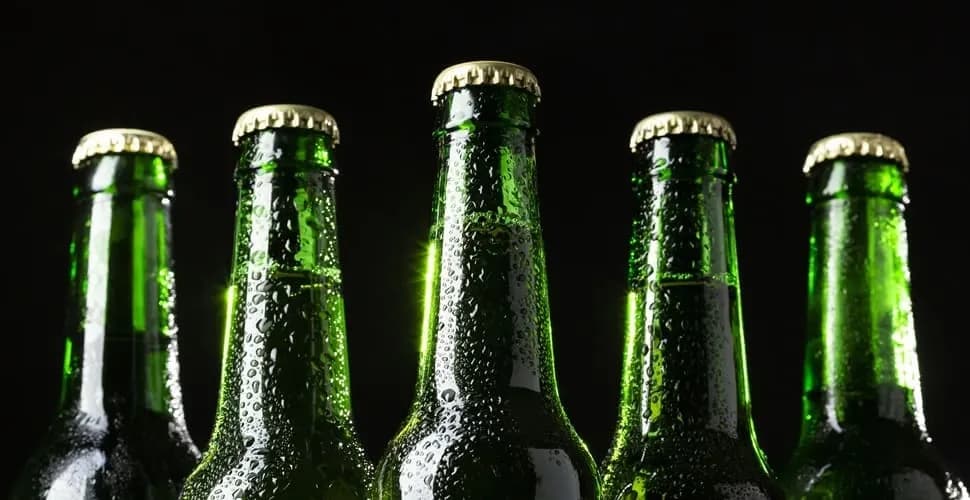
The report draws on figures from Cerveceros Latinoamericanos regarding the regional impact of the beer industry in observance of World Beer Day.
In a context where sustainability, water efficiency, and social transformation are priorities, the brewing industry is reaffirming its role as a strategic player in economic development.
Every first Friday in August,World Beer Dayprovides an opportunity to recognize the impact of this sector, which accounts for 1.3 % of the region’s GDP and generates nearly 3.9 million jobs in Latin America, according toCerveceros Latinoamericanos.
Globally, beer remains the most widely consumed alcoholic beverage, with annual production approaching 1,880 million hectoliters, according toStatista. Of that total, 617 million hectoliters were produced in the Americas, making it the world’s leading beer-producing region, followed by Asia with less than 570 million hectoliters produced in the same year.
Mexican Beer on the World Stage
In this context, Mexico ranks asthe world’s fourth-largest producer, accounting for 7.2 % of global volume, behind China, the United States, and Brazil, according toCerveceros de México.
This leadership is measured not only in terms of volume, but also in terms of impact. The Mexican beer value chain encompasses168 economic activities, from the farm to the Horeca channel, generating more than700,000 jobsand driving innovation in areas such as:
- energy efficiency
- circular economy
- regenerative agriculture
- sustainable packaging
HEINEKEN, with short- and long-term results
HEINEKEN Mexico stands as a prime example of how these values have been integrated. With more than 135 years of history and a presence in many regions of the country, it has put Mexico on the map of global brewing innovation.
Its plant inMeoqui, Chihuahua, is recognized for operating with a water efficiency of1.71 liters of water per liter of beer produced, a figure lower than the international average of 3 to 5 liters, according to the HEINEKEN Global Sustainability Report 2024:
“We launched our circularity strategy in 2024, prioritizing three closed-loop areas in packaging development: Reuse, Recycled Content, and Recyclable by Design. We have set new targets for packaging while continuing to improve the circularity of production waste and water in our operations.”
“Our strategy focuses on water efficiency and the long-term restoration of priority watersheds, especially in areas experiencing water scarcity. Much of our water replenishment promotes biodiversity and soil health.”
“Our goal for 2030 is to reduce average water consumption at our breweries to 2.6 hl/hl in water-stressed areas and to 2.9 hl/hl worldwide. In 2024, our average water consumption was 3.0 hl/hl (2023: 3.0) in water-stressed areas and 3.1 hl/hl (2023: 3.2) across all our breweries, achieving an 11% reduction (12% adjusted for acquisitions and divestitures) compared to the 2018 baseline,” they report.
Meanwhile, its plant inTecatehas already achieved a 100% water balance, returning all the water contained in its products back to nature.
Currently, HEINEKEN Mexico has more than 17,000 employees, 178 distribution centers, 7 breweries, 1 malting plant, and a broad and diverse “Made in Mexico” portfolio featuring more than 21 brands.
As if that weren’t enough, the company allocates 20% of its media budget to smart-consumption campaigns, reaching more than 80 million people in Mexico, and promotes educational programs such as theSmart Consumption Caravan, which has already benefited more than 4,300 people in 2025, twice as many as in the entire previous year, demonstrating that leadership is also built on social responsibility.
Consumers recognize these efforts, as in 2024 the company ranked 19th in the ranking that measures the global footprint of consumer brands, compiled byWorldpanel by Numerator(formerly Kantar Worldpanel). The list can be broken down by category and region; the company’s ranking was based on global results within the beverages category.
Outlook for the Mexican Beer Industry
Beer is more than just a drink; it is a symbol of cultural roots. From the traditional “caguama” to signature craft labels, it has remained a relevant expression of identity, togetherness, and creativity. In Mexico, drinking beer is part of everyday social rituals and a narrative that connects generations.
And although the market faces challenges such as competition from emerging beverages, inflation in input costs, and regulatory challenges (such as the IEPS tax, which ranges from 26.5 % to 53 % depending on alcohol content), the sector remains dynamic.
The trend toward non-alcoholic beers, craft styles, and new flavors is in line with the demands of a more informed, conscious, and adventurous consumer.
At this moment, the future of the Mexican beer industry appears to be a balance between tradition and innovation, where operational efficiency, sustainability, and responsible consumption will be the perfect combination to continue transforming the industry.